Introduction
Insomnia is one of the most common sleep problems seen in clinical practice. It can affect how quickly a person falls asleep, how often they wake during the night, how early they wake in the morning, and how refreshed they feel after sleep.
Although occasional poor sleep is normal, insomnia becomes clinically important when sleep difficulty happens regularly and affects daytime functioning. People may feel tired, irritable, mentally foggy, less productive, or less able to manage usual responsibilities.
For patients, professionals, and general readers, understanding insomnia clearly is important because not every sleep problem has the same cause. Some cases improve with changes to routine and sleep behaviour, while others require assessment for mental health, physical illness, medication effects, or another sleep disorder.
What Is Insomnia?
Insomnia means persistent difficulty sleeping despite having a reasonable opportunity to sleep. It may involve difficulty falling asleep, difficulty staying asleep, waking too early, or waking without feeling restored.
The NHS insomnia overview describes insomnia as regularly having problems sleeping, including trouble falling asleep, waking several times during the night, waking early, and feeling tired or irritable during the day. This distinction is important because insomnia is not measured only by hours slept; it is also measured by how the person feels and functions afterward.
In clinical practice, healthcare professionals look at both night-time symptoms and daytime impact. A person may sleep for fewer hours than average but feel well, while another person may spend enough time in bed yet still experience poor-quality, fragmented, or unrefreshing sleep.
Why Insomnia Matters
Sleep supports attention, learning, mood regulation, immune function, metabolic health, and physical recovery. When insomnia continues, it can affect work performance, relationships, driving safety, and general wellbeing.
Short periods of poor sleep often happen during stress, illness, travel, pain, bereavement, or major life changes. However, when poor sleep becomes a repeating pattern, people may start worrying about sleep itself. This worry can make the problem more persistent.
From a healthcare perspective, insomnia is also important because it can be a symptom of another condition. Anxiety, depression, chronic pain, breathing disorders, hormonal changes, neurological illness, and medicine side effects can all contribute to sleep disruption.
Main Symptoms of Insomnia
Insomnia symptoms can vary, but they usually involve a pattern of sleep dissatisfaction. The person may be lying awake for long periods, waking repeatedly, or feeling that sleep is light and broken.
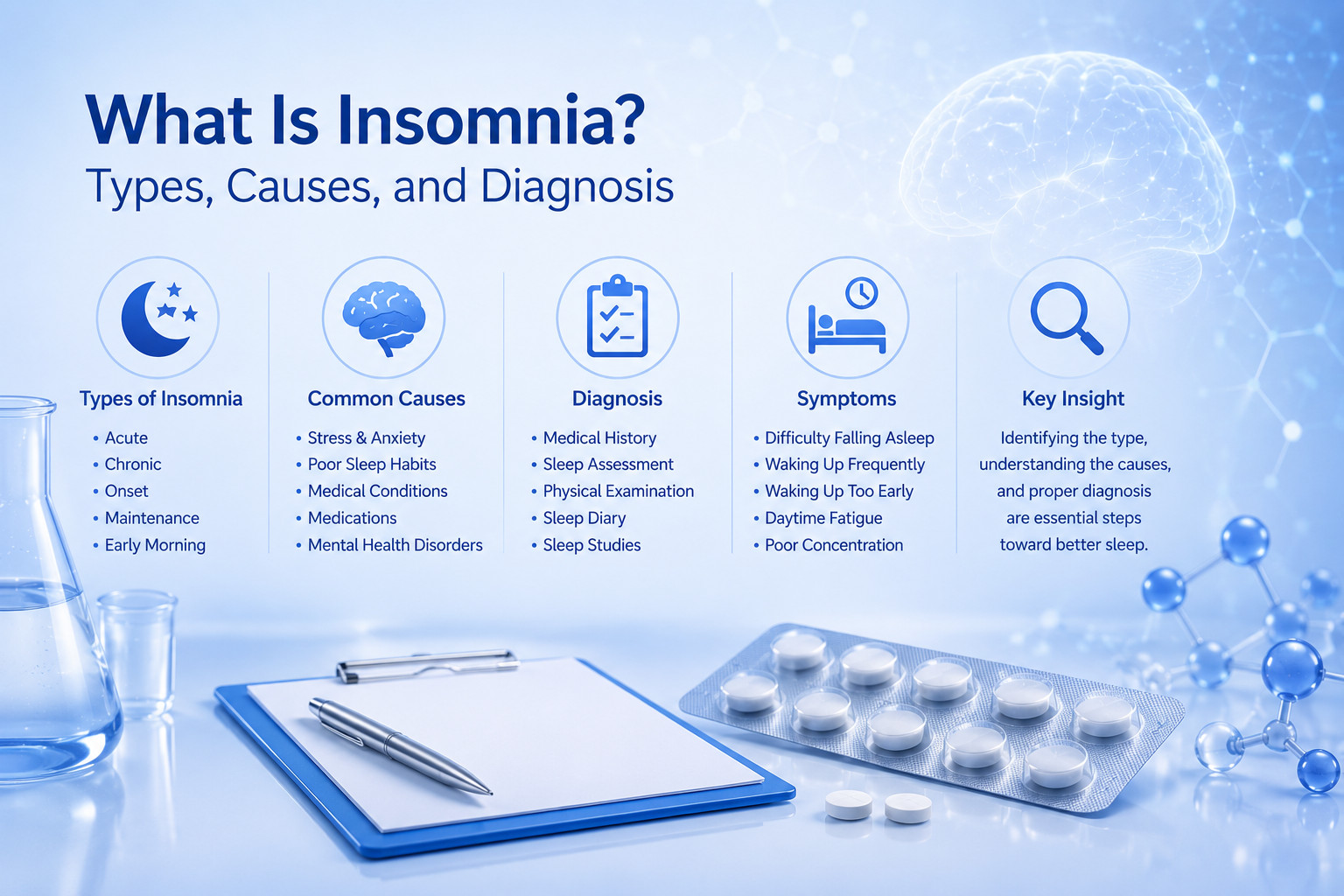
Common night-time symptoms include difficulty falling asleep, frequent waking, long periods awake during the night, early-morning waking, and non-restorative sleep. Some people describe feeling “tired but wired,” where the body feels exhausted but the mind remains alert.
Daytime symptoms are equally important. These may include tiredness, low mood, irritability, poor concentration, reduced motivation, headaches, slower reaction time, or difficulty remembering information.
Types of Insomnia
Insomnia can be described in several ways. The most useful categories are based on duration, timing, pattern, and underlying cause.
Short-Term Insomnia
Short-term insomnia lasts for less than three months. It is often linked with a clear trigger such as stress, travel, illness, grief, work pressure, exams, family change, or temporary pain.
The NICE insomnia diagnosis guidance states that short-term insomnia can be diagnosed when symptoms have been present for less than three months. This form may improve once the trigger is addressed, although it can sometimes become more persistent if unhelpful sleep habits develop.
Short-term insomnia should still be taken seriously if it affects safety, mood, work, or daily functioning. Early advice may prevent the pattern from becoming chronic.
Chronic Insomnia
Chronic insomnia lasts longer and follows a more established pattern. It may occur at least three nights per week and continue for three months or more.
NICE describes chronic insomnia as symptoms occurring on at least three nights per week for three months or longer. This is a helpful clinical threshold because it separates temporary sleep disruption from a more persistent sleep disorder.
Chronic insomnia often involves several interacting factors. A person may have started with a stressful event, then developed sleep anxiety, irregular bedtime habits, increased time in bed, or a pattern of checking the clock through the night.
Sleep-Onset Insomnia
Sleep-onset insomnia means difficulty falling asleep at the start of the night. People may go to bed feeling tired but remain awake for an hour or more.
Common contributors include stress, anxiety, late caffeine, evening screen use, irregular bedtimes, shift work, pain, restless legs, or a racing mind. Some people also develop a learned association between bed and wakefulness.
Treatment usually begins with identifying triggers and improving sleep behaviour. If symptoms are persistent, a healthcare professional may assess for anxiety, depression, circadian rhythm disturbance, medication effects, or other sleep disorders.
Sleep-Maintenance Insomnia
Sleep-maintenance insomnia means difficulty staying asleep. A person may fall asleep normally but wake several times during the night or remain awake for long periods after waking.
Possible causes include pain, nocturia, alcohol use, stress, hot flushes, breathing problems, acid reflux, environmental noise, or sleep apnoea. Some medicines can also disturb sleep architecture or increase night-time waking.
This pattern deserves careful assessment when waking is frequent, associated with choking or gasping, linked with daytime sleepiness, or accompanied by loud snoring. These features may suggest another sleep disorder rather than uncomplicated insomnia.
Early-Morning Awakening Insomnia
Early-morning awakening insomnia involves waking earlier than intended and being unable to return to sleep. It can be particularly frustrating because the person may feel exhausted but unable to restart sleep.
This pattern can occur with stress, depression, ageing-related sleep changes, pain, alcohol use, or circadian rhythm shifts. It is also common when someone goes to bed very early and spends too much time in bed.
A clinician may ask whether early waking is accompanied by low mood, loss of interest, appetite changes, hopelessness, or anxiety. These symptoms can help determine whether mental health assessment is needed.
Primary and Secondary Insomnia
Older terminology sometimes divided insomnia into “primary” and “secondary” insomnia. Primary insomnia meant sleep difficulty not clearly caused by another condition, while secondary insomnia meant sleep difficulty linked to illness, pain, medicines, mental health, or substances.
Modern sleep medicine often avoids treating this division as too simple. Many patients have overlapping contributors, and insomnia may continue even after the original trigger improves.
In practical terms, the key question is not only “what started the insomnia?” but also “what is keeping it going now?” This approach helps clinicians address both causes and maintaining factors.
Common Causes of Insomnia
Insomnia rarely has one single cause. It usually develops through a combination of biological, psychological, behavioural, medical, and environmental influences.
Stress and Life Events
Stress is one of the most common causes of short-term insomnia. Work pressure, financial concerns, relationship difficulties, exams, caring responsibilities, bereavement, and major life transitions can all keep the nervous system alert at night.
When stress is temporary, sleep may return to normal naturally. However, if the person begins to fear bedtime or expects another bad night, insomnia can persist beyond the original stressor.
Healthcare professionals often ask what was happening when the sleep problem began. This timeline can reveal whether insomnia followed a specific trigger or developed gradually.
Anxiety and Depression
Anxiety can make it difficult to switch off at night. Worry, rumination, physical tension, panic symptoms, and repeated checking of the time can all interfere with sleep onset and sleep continuity.
Depression may cause early waking, fragmented sleep, oversleeping, or non-restorative sleep. Sleep symptoms can also worsen mood, creating a cycle where poor sleep and emotional distress reinforce each other.
Patients should seek professional help if insomnia is accompanied by persistent low mood, loss of interest, severe anxiety, panic attacks, hopelessness, or thoughts of self-harm. These symptoms require timely clinical support.
Pain and Physical Health Conditions
Pain is a frequent contributor to insomnia. Arthritis, back pain, migraine, fibromyalgia, injury, nerve pain, and post-operative discomfort can all disrupt sleep.
Other physical conditions may also affect sleep. Examples include asthma, chronic obstructive pulmonary disease, heart failure, acid reflux, urinary symptoms, thyroid disease, menopause symptoms, neurological conditions, and pregnancy-related discomfort.
In these situations, treating insomnia without addressing the underlying condition may be incomplete. A healthcare professional may review symptom control, timing of medicines, and whether additional assessment is needed.
Medicines and Substances
Some medicines can interfere with sleep. These may include certain antidepressants, steroids, stimulants, decongestants, some asthma medicines, thyroid medicines, and medicines that increase urination.
Caffeine, nicotine, and alcohol are also common contributors. Caffeine can remain active for several hours, nicotine is stimulating, and alcohol may make people feel sleepy initially but often disrupts sleep later in the night.
Patients should not stop prescribed medicines suddenly without medical advice. A doctor or pharmacist can review whether timing, dose, or an alternative medicine may be appropriate.
Poor Sleep Habits
Sleep habits can strongly influence insomnia. Irregular wake times, long daytime naps, spending too much time in bed, using screens late at night, working in bed, or frequently checking the clock can all reinforce wakefulness.
A bedroom that is too hot, noisy, bright, or uncomfortable may also contribute. Environmental factors are sometimes overlooked, but they can be central to the problem.
Good sleep habits are not a cure for every case of insomnia, but they are a foundation for assessment and treatment. They also help clinicians understand whether further intervention is needed.
Circadian Rhythm Disruption
The circadian rhythm is the body’s internal timing system. It helps regulate sleep, wakefulness, hormone release, body temperature, and alertness across the day.
Shift work, jet lag, irregular schedules, late-night light exposure, and delayed sleep patterns can push sleep timing out of alignment. A person may be unable to sleep at conventional times even when tired.
Diagnosis may involve a sleep diary, work schedule review, and questions about natural sleep timing on free days. The goal is to distinguish insomnia from a body-clock disorder, because management may differ.
Risk Factors for Insomnia
Anyone can experience insomnia, but some people are more vulnerable. Risk factors include older age, female sex, menopause, pregnancy, chronic pain, mental health conditions, long-term illness, irregular work schedules, and high stress levels.
People with a family tendency toward poor sleep may also be more susceptible. Personality traits such as perfectionism, high vigilance, or strong worry about performance may make sleep more fragile during stressful periods.
Certain occupational groups may be at higher risk because of shift work, safety-critical duties, travel, or irregular hours. This includes healthcare workers, transport workers, emergency responders, carers, and people working across time zones.
How Insomnia Is Diagnosed
Insomnia is usually diagnosed through a careful clinical history rather than a single test. The clinician asks about sleep symptoms, duration, frequency, daytime impact, routines, medical history, mental health, medicines, and substance use.
The NICE management guidance for insomnia recommends addressing underlying causes and avoiding long-term pharmacological therapy for insomnia. It also notes that referral may be needed when another sleep disorder is suspected, diagnosis is uncertain, or long-term insomnia has not responded to primary care management.
A diagnosis is stronger when symptoms are regular, persistent, and linked with daytime impairment. Occasional poor sleep alone is not usually enough to diagnose insomnia disorder.
What a Sleep History May Include
A sleep history helps identify patterns. A clinician may ask what time the person goes to bed, how long it takes to fall asleep, how often they wake, what time they wake finally, and when they get out of bed.
They may also ask about naps, caffeine, alcohol, nicotine, exercise, screen use, work hours, bedroom environment, stress, mood, pain, snoring, breathing pauses, restless legs, nightmares, and unusual behaviours during sleep.
For professionals, a structured sleep history is often more useful than a simple question such as “how many hours do you sleep?” Sleep quality, timing, regularity, and daytime function are all clinically relevant.
Sleep Diary and Questionnaires
A sleep diary is often used to record sleep patterns over one or two weeks. It may include bedtime, wake time, estimated sleep duration, night waking, naps, caffeine, alcohol, exercise, and perceived sleep quality.
Sleep diaries help separate perception from pattern. Many patients underestimate or overestimate sleep during insomnia, and a diary can provide a clearer picture without requiring specialist equipment.
Questionnaires may also be used in some settings. They can measure insomnia severity, sleepiness, anxiety, depression, or quality of life, but they do not replace clinical judgement.
Are Sleep Tests Needed?
Most people with insomnia do not need a sleep study. Insomnia is usually a clinical diagnosis based on symptoms and history.
Sleep tests may be considered if another disorder is suspected. Examples include obstructive sleep apnoea, periodic limb movement disorder, narcolepsy, parasomnias, seizures during sleep, or complex unexplained symptoms.
Signs that may prompt further investigation include loud snoring, witnessed breathing pauses, choking or gasping at night, severe daytime sleepiness, sudden muscle weakness, unusual movements, or potentially dangerous sleep behaviours.
Differential Diagnosis: Conditions That Can Look Like Insomnia
Not every complaint of poor sleep is insomnia. Some people have delayed sleep-wake phase disorder, where the body naturally wants to sleep and wake much later than expected.
Others may have sleep apnoea, where breathing repeatedly pauses or becomes restricted during sleep. This can cause frequent waking, morning headaches, dry mouth, and daytime sleepiness.
Restless legs syndrome can also mimic insomnia because uncomfortable leg sensations make it hard to fall asleep. Accurate diagnosis matters because the treatment approach is different for each condition.
When to Seek Medical Advice
Patients should seek medical advice if insomnia lasts for several weeks, affects daytime functioning, creates safety concerns, or occurs with significant anxiety, depression, pain, breathing symptoms, or medication concerns.
Medical advice is also important if sleep problems are worsening, if the person is using alcohol or sedatives to sleep, or if they feel unable to cope. Early support can reduce the chance of chronic insomnia developing.
Urgent help is needed if insomnia occurs with thoughts of self-harm, severe confusion, hallucinations, chest pain, breathing difficulty, or symptoms of mania such as extreme energy, reduced need for sleep, risky behaviour, or unusually elevated mood.
Treatment Context and Prescription Medicines
Treatment depends on the cause, duration, and severity of insomnia. Non-medicine approaches, especially cognitive behavioural therapy for insomnia, are generally preferred for persistent insomnia.
Sleeping tablets may be considered in selected short-term situations, but they require careful medical supervision. Prescription hypnotics can cause side effects, next-day impairment, tolerance, dependence, and withdrawal symptoms.
From a regulatory perspective, medicine-related information should remain factual and balanced. ZOP75 provides educational material about sleep health and prescription medicine topics, and pages such as ZOP 7.5 tablets should be understood as informational content rather than a substitute for professional medical assessment.
Practical Questions Patients Can Prepare
Before speaking with a healthcare professional, patients may find it helpful to prepare a brief sleep summary. This can make the consultation more accurate and efficient.
Useful details include when the insomnia began, how often it happens, what type of sleep difficulty is present, how it affects daytime life, and what has already been tried. Patients should also list medicines, supplements, caffeine intake, alcohol use, work schedule, and any symptoms such as pain, snoring, anxiety, or low mood.
A sleep diary can be especially useful if symptoms have lasted more than a few weeks. It helps identify patterns that may not be obvious from memory alone.
Key Takeaways
Insomnia is a regular difficulty with sleep that affects daytime wellbeing or functioning. It may involve trouble falling asleep, staying asleep, waking too early, or feeling unrefreshed after sleep.
The main types include short-term insomnia, chronic insomnia, sleep-onset insomnia, sleep-maintenance insomnia, and early-morning awakening insomnia. Causes can include stress, anxiety, depression, pain, physical illness, medicines, substances, poor sleep habits, and circadian rhythm disruption.
Diagnosis is usually based on a careful clinical history, sometimes supported by a sleep diary or questionnaires. Sleep studies are not routinely needed unless another sleep disorder is suspected.
Insomnia is manageable, but the right approach depends on identifying what is causing and maintaining the sleep problem. Patients should seek medical advice when symptoms are persistent, distressing, unsafe, or linked with physical or mental health concerns.
Medical Disclaimer:
This content is for informational purposes only and does not replace professional medical advice, diagnosis, or treatment. Insomnia can have many causes, including medical, psychological, and medication-related factors. Always consult a qualified healthcare professional if sleep problems persist, worsen, affect daytime functioning, or occur with symptoms such as depression, anxiety, breathing problems, pain, or thoughts of self-harm.