Introduction
ZOP 7.5 is commonly understood as a 7.5 mg zopiclone tablet formulation used for the short-term management of insomnia in adults. Zopiclone belongs to a group of medicines known as hypnotics, sometimes referred to as “Z-drugs,” which act on the brain to help support sleep.
Because zopiclone affects alertness, coordination, memory, and breathing in some patients, it should be taken only under medical supervision. It is not intended for casual use, long-term self-management, or use without a valid prescription where prescription control applies.
This guide explains how ZOP 7.5 is typically taken, what patients should avoid, and when to seek medical advice. It is written for general educational use and should not replace the instructions given by a doctor, pharmacist, or the official patient leaflet supplied with the medicine.
What Is ZOP 7.5?
ZOP 7.5 refers to a tablet containing 7.5 mg of zopiclone as the active ingredient. Zopiclone is a sedative-hypnotic medicine prescribed for short-term insomnia when sleep difficulty is severe, distressing, or causing daytime impairment.
In clinical practice, zopiclone may be considered when non-medicine approaches are not enough or when a short course of treatment is clinically justified. The goal is usually temporary support, not permanent dependence on a sleeping tablet.
The ZOP 7.5 information resource is intended for factual sleep-health and medicine education. It should not be interpreted as a recommendation to start, change, or continue zopiclone without professional advice.
Before Taking ZOP 7.5
Before taking ZOP 7.5, patients should confirm that the medicine has been prescribed specifically for them. Zopiclone should not be shared with another person, even if they also have insomnia.
A healthcare professional should know about the patient’s medical history before treatment begins. Important details include liver disease, kidney problems, breathing conditions, sleep apnoea, myasthenia gravis, depression, suicidal thoughts, substance-use history, pregnancy, breastfeeding, and previous reactions to sleeping medicines.
Patients should also provide a complete list of medicines and supplements. This includes prescription medicines, over-the-counter products, herbal preparations, antihistamines, antidepressants, antipsychotics, epilepsy medicines, opioid pain medicines, and medicines used for anxiety.
Standard Adult Use
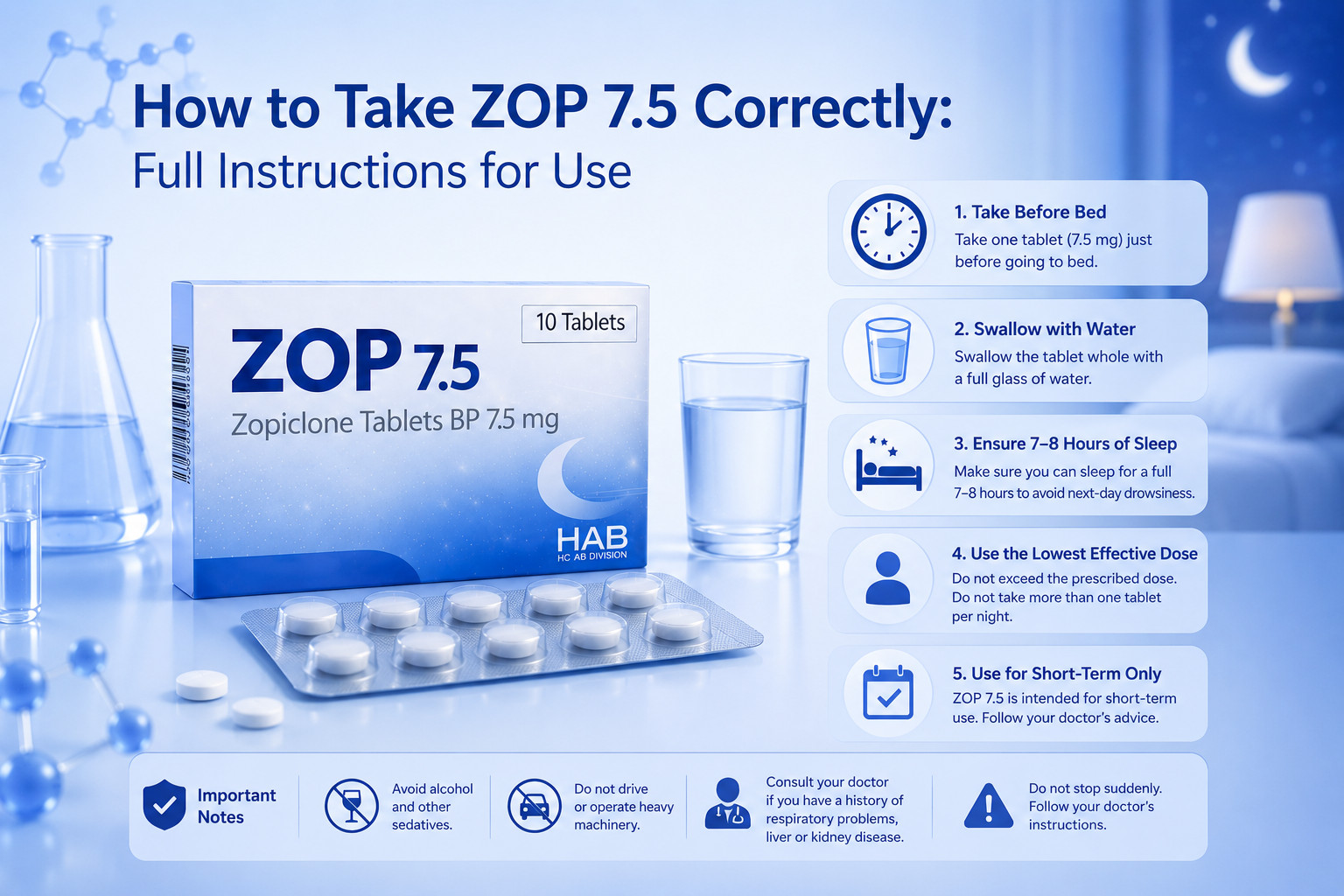
For many adults, zopiclone 7.5 mg is taken once at night shortly before going to bed. The dose should be swallowed exactly as prescribed and should not be increased without medical advice.
The Zopiclone 7.5 mg Summary of Product Characteristics describes 7.5 mg by mouth shortly before retiring as the recommended adult dose for that product. However, the right dose can vary depending on patient factors and the specific authorised product.
Patients should not take a second tablet during the same night unless this has been clearly prescribed. Taking extra doses increases the risk of excessive sedation, confusion, falls, breathing problems, memory loss, overdose, and next-day impairment.
When to Take ZOP 7.5
ZOP 7.5 should generally be taken immediately before bedtime. It should not be taken earlier in the evening while the patient is still active, working, driving, using devices, cooking, or caring for others.
Patients should take it only when they can remain in bed for a full night. If a person takes zopiclone and then stays awake, they may experience dizziness, poor coordination, unusual behaviour, memory problems, or reduced judgement.
It is also important not to take zopiclone if the night’s sleep will be shortened. Taking it too late at night or too close to the morning can increase next-day drowsiness and make normal activities unsafe.
How to Take the Tablet
The tablet should usually be swallowed with water. Patients should follow the instructions on the prescription label and patient leaflet, including whether the tablet can be divided.
Some zopiclone tablets are scored, but a score line does not always mean the medicine should be split for dose adjustment. If a lower dose is needed, the prescriber or pharmacist should advise on the correct tablet strength and method.
Zopiclone should not be crushed, misused, or taken in a way that differs from the prescribed instructions. Altering how a medicine is taken may change its effect and increase safety risks.
Taking ZOP 7.5 With or Without Food
Zopiclone can generally be taken at bedtime with water. A very heavy meal close to bedtime may delay sleep onset in some people and can also worsen reflux or discomfort, which may interfere with sleep.
Patients should avoid using food, alcohol, or other sedatives as part of a “sleep routine” with zopiclone. Combining sedating influences can make the medicine less predictable and more dangerous.
If a patient has nausea, stomach discomfort, or difficulty swallowing tablets, they should ask a healthcare professional for advice. They should not change the way they take the medicine without checking first.
How Long to Use ZOP 7.5
Zopiclone is normally intended for short-term use. Treatment duration should be defined by the prescriber and reviewed if insomnia continues.
The NICE decision aid on sleeping pill prescriptions discusses benzodiazepines and Z-drugs, including zopiclone, in the context of dependence and withdrawal. This reflects an important safety principle: sleeping tablets should be reviewed carefully and should not become an automatic long-term treatment.
Using zopiclone for longer than advised can increase the risk of tolerance, dependence, withdrawal symptoms, rebound insomnia, and difficulty stopping. If sleep problems persist, the underlying cause of insomnia should be reassessed.
What If You Miss a Dose?
If a patient forgets to take ZOP 7.5 at bedtime, they should not take it later unless there is still enough time for a full night’s sleep and the prescriber’s instructions allow it. Taking it in the middle of the night may cause next-day drowsiness and impaired alertness.
A missed dose should not be replaced by taking extra medicine the next night. Doubling the dose can be unsafe.
If missed doses happen often, the patient should speak with a doctor or pharmacist. The treatment plan may need to be reviewed, especially if insomnia is continuing despite medicine use.
What If You Take Too Much?
Taking more zopiclone than prescribed can be dangerous. Overdose risk increases further if zopiclone is combined with alcohol, opioids, benzodiazepines, sedating antihistamines, antidepressants, antipsychotics, or other central nervous system depressants.
Symptoms of taking too much may include extreme sleepiness, confusion, poor coordination, slurred speech, low muscle tone, slow breathing, fainting, or loss of consciousness. Severe overdose can be life-threatening.
If overdose is suspected, urgent medical help is required. Patients or carers should contact emergency services or a poison information service according to local guidance and should provide the medicine packaging if available.
Alcohol and ZOP 7.5
Alcohol should be avoided while taking ZOP 7.5. Alcohol can intensify the sedative effects of zopiclone and increase the risk of dangerous impairment.
The combination may cause excessive drowsiness, reduced breathing, poor coordination, blackouts, unusual behaviour, accidents, or overdose. Even small amounts of alcohol can make the medicine’s effects less predictable.
Patients who regularly drink alcohol should discuss this honestly with their healthcare professional before taking zopiclone. This is especially important if alcohol is being used to manage stress, anxiety, or sleep.
Driving and Operating Machinery
ZOP 7.5 can impair driving, cycling, operating machinery, decision-making, and safety-critical tasks. The effect may continue into the next morning, particularly if sleep time was short or the patient is sensitive to sedatives.
Patients should not drive or perform hazardous tasks if they feel sleepy, dizzy, confused, slowed down, or not fully alert. Feeling “awake” does not always mean reaction time and coordination have fully recovered.
In clinical practice, patients are often advised to assess how they respond to the medicine before resuming normal responsibilities. Local driving laws and workplace safety rules should also be followed.
Medicines That May Interact With ZOP 7.5
Zopiclone can interact with other medicines that affect the brain, breathing, or liver metabolism. Some combinations increase sedation, while others may increase or reduce zopiclone levels in the body.
Medicines of concern may include opioids, benzodiazepines, antipsychotics, antidepressants, sedating antihistamines, epilepsy medicines, anaesthetics, muscle relaxants, and some medicines for infections. Certain antifungal medicines, macrolide antibiotics, and HIV medicines may also affect zopiclone exposure.
The Zopiclone Pinewood 7.5 mg patient leaflet advises patients to tell their doctor or pharmacist about other medicines before using zopiclone. This is especially important for patients taking multiple medicines or medicines that cause drowsiness.
Who May Need a Lower Dose?
Some patients may need a lower starting dose than 7.5 mg. This can include older adults, people with liver problems, people with reduced kidney function, patients with chronic breathing problems, or those who are more sensitive to sedative medicines.
A lower dose may reduce the risk of falls, confusion, excessive sedation, and next-day impairment. Dose adjustment is a medical decision and should not be managed by the patient alone.
Patients who feel excessively drowsy, unsteady, confused, or unusually affected after taking ZOP 7.5 should contact a healthcare professional. These symptoms may indicate that the dose is too strong or that another medicine is interacting.
Who Should Not Take ZOP 7.5 Without Specialist Advice?
ZOP 7.5 may be unsuitable for people with certain conditions. These may include allergy to zopiclone, severe liver disease, severe breathing problems, sleep apnoea, myasthenia gravis, or a history of complex sleep behaviours linked to sedative medicines.
Patients with depression, suicidal thoughts, substance-use disorder, alcohol dependence, or a history of medicine misuse require careful assessment. Zopiclone may worsen some risks or become difficult to stop.
Pregnant or breastfeeding patients should not use zopiclone unless a healthcare professional has specifically assessed the risks and benefits. Sedative medicines can have implications for the baby, depending on timing, dose, and individual circumstances.
Possible Side Effects
ZOP 7.5 can cause side effects. Some are mild and short-lived, while others require medical review.
Commonly reported side effects include bitter or metallic taste, dry mouth, drowsiness, dizziness, headache, tiredness, and reduced alertness. Some patients may experience nausea, confusion, mood changes, memory problems, or unsteadiness.
More serious reactions may include allergic swelling, breathing difficulty, severe confusion, hallucinations, unusual behaviour, worsening depression, dependence, withdrawal symptoms, or thoughts of self-harm. Patients should seek urgent medical help for severe allergic symptoms, breathing problems, collapse, overdose, or dangerous changes in behaviour.
Unusual Sleep Behaviours
Zopiclone and related hypnotic medicines have been associated with unusual behaviours while not fully awake. These can include sleepwalking, preparing or eating food, making phone calls, or other activities with little or no memory afterward.
The risk may be higher when zopiclone is taken with alcohol, other sedatives, or at doses above those prescribed. It may also be higher if the patient does not go to bed immediately after taking the medicine.
If unusual sleep behaviour occurs, the patient should stop and seek medical advice according to the prescriber’s instructions. Continuing the medicine without review may be unsafe.
Dependence, Tolerance, and Withdrawal
ZOP 7.5 can lead to tolerance, dependence, and withdrawal symptoms, particularly when used regularly for longer than recommended. Tolerance means the medicine may appear to work less well over time.
Dependence means the body has adapted to the medicine. Withdrawal symptoms may occur if treatment is stopped suddenly, especially after prolonged use.
Withdrawal symptoms can include anxiety, agitation, sweating, tremor, headache, palpitations, irritability, nightmares, rebound insomnia, confusion, or mood changes. Patients who have used zopiclone regularly should ask a healthcare professional how to reduce or stop it safely.
Stopping ZOP 7.5
Patients should not stop long-term or regular zopiclone suddenly unless a healthcare professional advises them to do so. Sudden stopping may cause rebound insomnia or withdrawal symptoms.
A prescriber may recommend gradual dose reduction, depending on treatment duration, dose, patient risk factors, and response. The plan should be individual rather than copied from another patient.
Stopping medicine is also a chance to review insomnia management more broadly. Sleep hygiene, cognitive behavioural therapy for insomnia, mental health support, pain management, and treatment of underlying conditions may all be relevant.
Safe Storage
ZOP 7.5 should be stored securely, away from children, visitors, and anyone for whom it was not prescribed. Accidental ingestion can be dangerous, especially for children or vulnerable adults.
Patients should keep tablets in their original packaging where possible. This helps preserve identification, expiry date, batch information, and patient leaflet access.
Unused or expired tablets should be returned to a pharmacy or disposed of according to local medicine-disposal guidance. They should not be shared, kept for future self-treatment, or thrown away where others may access them.
Practical Bedtime Checklist
Before taking ZOP 7.5, patients should confirm that they are ready to sleep. They should have finished activities that require alertness and should be able to stay in bed for the night.
Alcohol should be avoided, and no extra sedating medicine should be taken unless specifically approved by a healthcare professional. The patient should also avoid taking another dose if they wake during the night, unless this has been clearly prescribed.
A simple routine can reduce risk: take the prescribed dose, go straight to bed, allow enough sleep time, and avoid driving or hazardous tasks if drowsy the next day.
When to Contact a Doctor or Pharmacist
Patients should contact a healthcare professional if ZOP 7.5 is not helping, if insomnia continues beyond the planned treatment period, or if side effects are troublesome. Dose changes should be made only with professional guidance.
Medical advice is also needed if the patient feels dependent on the medicine, finds it difficult to stop, or is taking it more often than prescribed. Early review can prevent a short-term treatment from becoming a long-term problem.
Urgent help is needed for overdose, severe allergic reaction, breathing problems, fainting, dangerous confusion, unusual sleep behaviours, or thoughts of self-harm.
Guidance for Healthcare and B2B Readers
For healthcare professionals and manufacturer-related audiences, instructions for use should be presented in a balanced, non-promotional manner. Patient-facing content should clearly state that zopiclone is a prescription medicine where applicable and that use must follow local regulatory requirements.
Educational material should avoid suggesting that ZOP 7.5 is suitable for all insomnia cases. It should also avoid encouraging dose escalation, repeat use without review, or use as a general lifestyle sleep aid.
From a regulatory perspective, the safest communication is precise, factual, and aligned with authorised product information. Any local version of this content should be checked against the approved patient leaflet, prescribing information, and applicable advertising rules in the target market.
Frequently Asked Questions
Can I take ZOP 7.5 every night?
ZOP 7.5 should be taken only as prescribed. Zopiclone is usually intended for short-term use because regular long-term use can increase the risk of tolerance, dependence, withdrawal symptoms, and next-day impairment.
Can I take half a tablet?
Only if a healthcare professional confirms that it is appropriate and the specific tablet can be divided correctly. Some patients may need a lower dose, but dose changes should not be self-managed.
How quickly does ZOP 7.5 work?
Zopiclone is taken shortly before bedtime because it is intended to help with sleep soon after dosing. Patients should go to bed immediately after taking it and avoid staying active.
Can I take ZOP 7.5 with alcohol?
No. Alcohol should be avoided because it can increase sedation, impair breathing and coordination, and raise the risk of accidents or overdose.
What should I do if I still cannot sleep?
Do not take extra tablets unless specifically instructed by a healthcare professional. Contact a doctor or pharmacist if insomnia continues, as the cause of poor sleep may need reassessment.
Key Takeaways
ZOP 7.5 should be taken exactly as prescribed, usually shortly before bedtime and only when there is enough time for a full night’s sleep. It should not be combined with alcohol or other sedating medicines unless a healthcare professional has approved the combination.
Patients should not increase the dose, repeat a dose during the night, or continue treatment longer than advised. Zopiclone can cause next-day drowsiness, impaired coordination, interactions, dependence, withdrawal symptoms, and unusual sleep behaviours.
Safe use depends on medical supervision, short treatment duration, careful attention to side effects, and review if insomnia persists. ZOP 7.5 is not a substitute for diagnosing and addressing the underlying cause of sleep difficulty.
Medical Disclaimer:
This content is for informational purposes only and does not replace professional medical advice, diagnosis, or treatment. ZOP 7.5 contains zopiclone, a prescription medicine in many regulated markets. Use it only under the supervision of a qualified healthcare professional and always follow the patient leaflet, prescription label, and local medical guidance.