Introduction
Zopiclone is a prescription-only medicine used for the short-term treatment of insomnia in adults. It belongs to a group of medicines often called “Z-drugs,” which are hypnotic medicines that act on the brain to support sleep when insomnia is severe, distressing, or affecting daily functioning.
In clinical practice, zopiclone is usually considered when non-medicine approaches have not been enough or when short-term sleep disruption requires medical support. It is not intended as a general sleep aid for occasional sleeplessness, and it should only be used under the direction of a qualified healthcare professional.
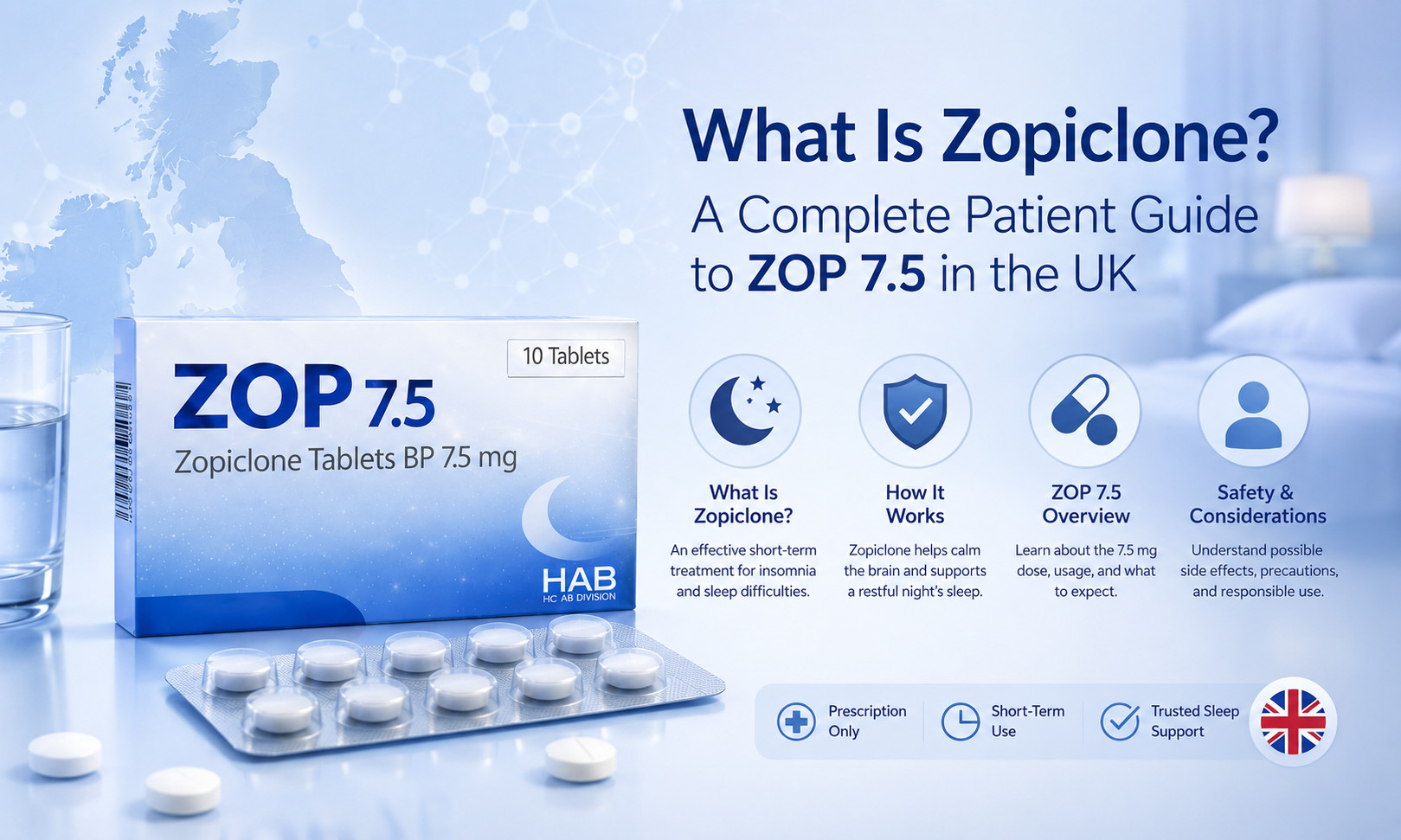
ZOP 7.5 refers to a 7.5 mg zopiclone tablet strength. Patients looking for balanced medicine education can use ZOP 7.5 mg as an informational reference, but treatment decisions should always be made with a doctor or pharmacist.
What Is Zopiclone?
Zopiclone is a hypnotic medicine prescribed for insomnia. It is used to help adults fall asleep, reduce night-time waking, or manage early morning waking when these symptoms are clinically significant.
According to the NHS zopiclone medicine guide, zopiclone is used for sleeping problems and is known in the UK under the brand name Zimovane. Generic zopiclone products are also available, including 3.75 mg and 7.5 mg tablet strengths.
Although zopiclone is sometimes compared with benzodiazepines, it is not the same medicine class. It is benzodiazepine-related and acts on similar brain pathways involved in sedation and sleep.
What Is ZOP 7.5?
ZOP 7.5 is commonly understood as a zopiclone 7.5 mg tablet formulation. The “7.5” refers to the amount of active ingredient, zopiclone, in each tablet.
A 7.5 mg tablet is a standard adult strength in many licensed zopiclone products. However, the correct dose is not the same for every patient. Healthcare professionals may recommend a lower dose for older adults, people with liver problems, patients with breathing concerns, or individuals who are more sensitive to sedative medicines.
From a regulatory perspective, the medicine should be supplied and used only where it is legally authorised and prescribed. Patients should never share zopiclone tablets with another person, even if that person appears to have similar sleep symptoms.
How Zopiclone Works
Zopiclone works by increasing the calming effect of gamma-aminobutyric acid, often shortened to GABA. GABA is a naturally occurring chemical messenger in the brain that helps reduce nerve activity.
By enhancing this calming pathway, zopiclone can make it easier to fall asleep and stay asleep for a period of time. This sedative effect is also the reason the medicine may impair alertness, coordination, memory, and reaction time.
The official zopiclone patient leaflet on eMC describes zopiclone as a hypnotic medicine that acts on the brain to help sleep. This patient leaflet also highlights important safety warnings, including dependence, tolerance, addiction, and withdrawal symptoms.
When Is Zopiclone Prescribed?
Zopiclone may be prescribed for short-term insomnia in adults over 18 years of age. This can include difficulty falling asleep, waking during the night, waking too early, or severe sleep disturbance linked with emotional distress or mental health symptoms.
Healthcare professionals generally recommend that hypnotic medicines are used for the shortest suitable time. They are not usually first-line treatment for long-term insomnia, where sleep-hygiene measures and psychological approaches such as cognitive behavioural therapy for insomnia may be more appropriate.
In the UK, zopiclone is a controlled medicine. The Misuse of Drugs Regulations 2001 Schedule 4 listing includes zopiclone, reflecting the need for regulated prescribing, supply, and handling.
Prescription Status and Legal Considerations in the UK
Zopiclone is a prescription-only medicine in the UK. This means it should be used only when prescribed by an authorised healthcare professional after an assessment of symptoms, medical history, current medicines, and potential risks.
It is not appropriate to obtain zopiclone from informal sources or to use tablets supplied to someone else. Unregulated medicines may contain the wrong dose, undeclared substances, or harmful contaminants.
From a patient-safety standpoint, the prescription requirement is not simply a legal formality. It allows a clinician to decide whether zopiclone is suitable, whether the dose should be adjusted, and how long treatment should continue.
Typical Dose and Duration
For many adults, zopiclone is prescribed as a single dose taken at bedtime. The 7.5 mg tablet strength is commonly used, although some patients may be prescribed a lower dose depending on age, health status, or tolerability.
Patients should take zopiclone exactly as directed on the prescription label and by their doctor or pharmacist. Taking more than prescribed does not make the treatment more appropriate and may increase the risk of excessive sedation, confusion, falls, breathing problems, overdose, and dependence.
The MHRA z-drug patient safety leaflet states that treatment with Z-drugs should be as short as possible and should not exceed four weeks including the tapering-off period. A doctor may provide individual instructions on stopping, especially if treatment has continued beyond a short course.
How to Take Zopiclone Safely
Zopiclone is usually taken just before going to bed. Patients should only take it when they can allow enough time for a full night’s sleep, because drowsiness and impaired alertness may continue into the next day.
It should not be taken with alcohol. Combining zopiclone with alcohol can intensify sedation and increase the risk of dangerous effects, including impaired breathing, reduced awareness, accidents, and overdose.
Patients should also tell their doctor or pharmacist about all other medicines they use. This includes prescription medicines, over-the-counter products, herbal remedies, sedating antihistamines, opioid pain medicines, antidepressants, antipsychotics, epilepsy medicines, and medicines that may affect liver enzymes.
Who Should Not Take Zopiclone?
Zopiclone is not suitable for everyone. A prescriber may avoid it or use extra caution if a patient has certain medical conditions or risk factors.
Zopiclone should generally not be used in people who are allergic to zopiclone or any tablet ingredient. It may also be unsuitable for patients with severe liver disease, severe breathing problems, sleep apnoea, myasthenia gravis, or a history of unusual sleep behaviours after taking hypnotic medicines.
The medicine is not recommended for children or adolescents under 18 years of age. Its safety and effectiveness in this age group have not been established in standard patient leaflets.
Extra caution is also needed for people with a history of alcohol or drug misuse, dependence on prescription medicines, depression, personality disorder, suicidal thoughts, or significant mental health concerns. These factors do not automatically mean treatment is impossible, but they require careful clinical judgement.
Possible Side Effects
Like all medicines, zopiclone can cause side effects. Not everyone experiences them, and their severity can vary.
Commonly reported effects include a bitter or metallic taste, dry mouth, drowsiness, dizziness, reduced alertness, and feeling tired the next day. Some people may also experience headache, nausea, confusion, changes in mood, or memory problems.
More serious effects require prompt medical attention. These can include allergic reactions, breathing difficulty, severe confusion, hallucinations, unusual behaviour during sleep, worsening depression, or thoughts of self-harm.
Patients should seek urgent help if they experience swelling of the face, lips, tongue, or throat, severe breathing problems, collapse, or signs of overdose. A pharmacist or doctor should be contacted for any side effect that is worrying, persistent, or unexpected.
Next-Day Drowsiness and Driving
Zopiclone can affect reaction time, judgement, coordination, and concentration. These effects may remain the next morning, even if the patient feels awake.
Patients should not drive, cycle, operate machinery, work at heights, or perform safety-critical tasks if they feel sleepy, dizzy, slowed down, confused, or not fully alert. The risk is higher if zopiclone is taken late at night, if sleep duration is too short, if alcohol is used, or if other sedating medicines are taken.
In clinical practice, healthcare professionals often advise patients to plan the first dose carefully. This allows the patient to understand how the medicine affects them before returning to normal activities.
Dependence, Tolerance, and Withdrawal
Zopiclone can cause tolerance, dependence, addiction, and withdrawal symptoms. These risks increase with higher doses, longer treatment duration, previous substance misuse, and use with alcohol or other sedating medicines.
Tolerance means the medicine may seem less effective over time. Dependence means the body has adapted to the medicine and may react when it is reduced or stopped. Addiction involves behavioural and psychological patterns such as craving, loss of control, or continued use despite harm.
Withdrawal symptoms can include anxiety, agitation, sweating, tremor, headache, palpitations, irritability, sleep disturbance, nightmares, confusion, and, rarely, more severe symptoms. For this reason, patients should not stop long-term or regular zopiclone suddenly unless advised to do so by a healthcare professional.
Zopiclone and Insomnia Management
Zopiclone may help with short-term sleep symptoms, but it does not treat every underlying cause of insomnia. Sleep problems can be linked with stress, pain, depression, anxiety, breathing disorders, shift work, medicines, caffeine, alcohol, or irregular sleep routines.
A full assessment is important when insomnia persists. Healthcare professionals may ask about sleep timing, daytime symptoms, mental health, medical conditions, substance use, and current medicines.
Non-medicine strategies remain important. These may include regular wake times, reducing late caffeine, limiting alcohol, creating a consistent wind-down routine, managing screen exposure, and addressing worries that keep the mind alert at night.
Practical Patient Safety Checklist
Before taking zopiclone, patients should be able to answer several safety questions clearly.
Has a doctor or authorised prescriber assessed the sleep problem? Is the dose written clearly on the prescription? Is there enough time for a full night’s sleep after taking the tablet? Has alcohol been avoided? Are other sedating medicines being used?
Patients should also know when treatment is expected to stop. If the medicine is still needed after the planned period, the next step should be a review, not automatic continuation.
Guidance for Healthcare Professionals and B2B Readers
For healthcare professionals, zopiclone should be positioned as a short-term pharmacological option for insomnia where clinical need is established. Risk assessment should include age, frailty, respiratory status, hepatic function, mental health history, substance-use history, fall risk, pregnancy or breastfeeding status, and concurrent medicines.
For B2B or manufacturer-related content, communication should remain balanced and non-promotional. Product information should distinguish clearly between active ingredient, strength, dosage form, prescription status, patient safety considerations, and local regulatory requirements.
From a regulatory perspective, patient-facing content should not imply that zopiclone is suitable for all sleep problems. It should not encourage self-diagnosis, self-medication, off-label use, dose escalation, or extended treatment without medical supervision.
Frequently Asked Questions
Is zopiclone the same as a sleeping pill?
Zopiclone is a hypnotic medicine, often described as a sleeping tablet. It is prescribed for short-term insomnia in adults when a clinician decides that medicine is appropriate.
Is ZOP 7.5 the same as zopiclone 7.5 mg?
ZOP 7.5 refers to a 7.5 mg zopiclone tablet strength. Patients should always check the active ingredient, strength, and instructions on the medicine label and patient leaflet.
Can zopiclone be taken every night?
Zopiclone is usually intended for short-term use. Taking it nightly for longer than prescribed may increase the risk of tolerance, dependence, withdrawal symptoms, and next-day impairment.
Can I drink alcohol with zopiclone?
Alcohol should be avoided while taking zopiclone. The combination can increase sedation and may lead to dangerous impairment or breathing problems.
What should I do if zopiclone stops working?
Do not increase the dose without medical advice. Contact the prescriber or pharmacist, as a review may be needed to assess tolerance, underlying causes of insomnia, and safer treatment options.
Key Takeaways
Zopiclone is a prescription-only hypnotic medicine used for short-term insomnia in adults. ZOP 7.5 refers to a 7.5 mg zopiclone tablet strength, but the correct dose and duration must be decided by a healthcare professional.
The medicine can be helpful in carefully selected patients, but it also carries important risks. These include next-day drowsiness, impaired driving ability, interactions with alcohol and sedatives, dependence, tolerance, addiction, and withdrawal symptoms.
Patients should use zopiclone only as prescribed, avoid sharing it, and seek professional advice if sleep problems continue. Safe use depends on medical supervision, clear treatment duration, and ongoing attention to the underlying causes of insomnia.
Medical Disclaimer:
This content is for informational purposes only and does not replace professional medical advice, diagnosis, or treatment. Zopiclone is a prescription medicine and should be used only under the supervision of a qualified healthcare professional. Always read the patient information leaflet supplied with your medicine and speak with your doctor or pharmacist if you have questions about suitability, dosage, side effects, interactions, or stopping treatment.